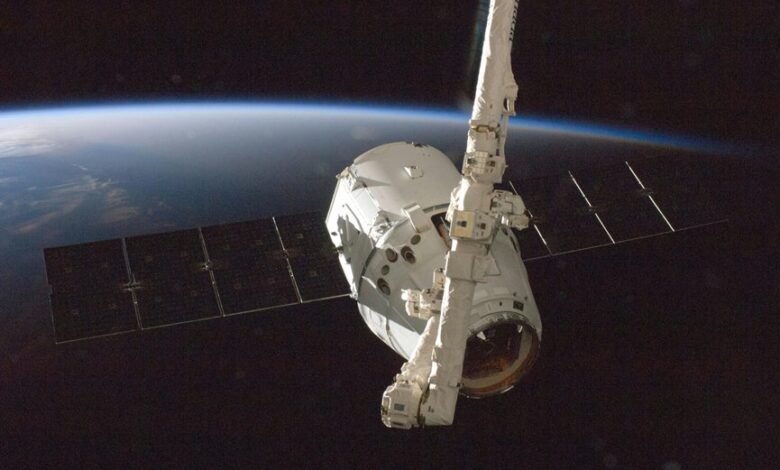
Hypernova Flow 920000212 presents a pivotal advancement in understanding hypernovae and their effects on orbital mechanics. Through detailed analysis of energy outputs and gravitational interactions, significant insights into propulsion technologies and navigation algorithms emerge. These findings could enhance spacecraft efficiency and trajectory optimization. However, the broader implications for future space missions remain to be fully explored, raising questions about the potential for interplanetary exploration and the sustainability of long-duration missions.
Overview of Hypernova Flow 920000212
Hypernova Flow 920000212 represents a significant advancement in the field of astrophysical research, specifically concerning the mechanisms and consequences of hypernovae.
This project meticulously analyzes hypernova characteristics, including energy output and nucleosynthesis.
Additionally, it explores orbital mechanics, emphasizing the gravitational interactions and trajectories influenced by hypernova explosions.
Such insights enhance the understanding of cosmic evolution and the broader implications for galactic structures.
Propulsion Technologies Behind the Orbit
While the study of hypernovae primarily focuses on their explosive phenomena, the propulsion technologies derived from understanding these cosmic events offer valuable insights into orbital dynamics.
Innovations in thrust mechanisms, inspired by hypernovae, enhance propulsion efficiency, enabling spacecraft to achieve greater velocities with reduced fuel consumption.
This advancement allows for more flexible mission profiles and increased maneuverability within strategic orbits, aligning with the desire for autonomy in space exploration.
Navigation Algorithms and Their Impact
As advancements in propulsion technologies continue to evolve, the development of sophisticated navigation algorithms plays a crucial role in optimizing spacecraft trajectories and operational efficiency.
These algorithms enhance navigation optimization, allowing for precise course corrections and improved fuel management. The impact of algorithm efficiency directly influences mission success, enabling greater flexibility and autonomy in space exploration while supporting the quest for expanded freedom in human endeavors beyond Earth.
Future Implications for Space Missions
The evolution of navigation algorithms is poised to significantly shape future space missions, particularly in the context of long-duration exploration and interplanetary travel.
Enhanced algorithms will enable precise trajectory adjustments in deep space, facilitating mission sustainability.
This advancement will empower autonomous systems to adapt to unforeseen challenges, ensuring the viability of extended missions and promoting humanity’s quest for freedom beyond Earth.
Conclusion
In essence, Hypernova Flow 920000212 serves as a cosmic lighthouse, illuminating the path for future space missions. By harnessing the energy and dynamics of hypernovae, researchers have developed propulsion technologies and navigation algorithms that propel spacecraft toward new frontiers. Just as ancient mariners relied on the stars to guide their voyages, modern explorers can now leverage these advancements to navigate the vast expanse of space, transforming ambitious dreams of interplanetary exploration into achievable realities.